
Do you have an appropriate decodable text for every phonics skill you’ve taught your students?
Do your decodables have natural-sounding language, or are there awkward sentences like “Min did nip the fig.” or “Pim did sit in sap.”?
Is the content engaging and relatable to your kids? Is there anything to learn and talk about in the text?

Are your decodable passages free of picture cues, or are there still pictures near the text?
Gone are the days of limited options in decodable books. There are so many high-quality resources available now, but most still have the same problems as those published decades ago.
In this post, we will reveal what to look for and what to avoid when choosing high-quality decodables.
3 things to AVOID in decodable texts
When it comes to choosing decodable texts, here are three things to avoid:
❌ 100% decodability
This may sound strange, being that we want our students to practice the application of taught phonics skills. But sometimes decodable text authors take this a little too far.
That’s how we end up with sentences like “Min did nip six figs.”
Just how decodable should a decodable book be?
I like the answer that Wiley Blevins gives in his book A Fresh Look at Phonics.
Blevins references the criteria set by the document, Becoming a Nation of Readers.
The report came with a warning about rigid criterion for exactly how many words should conform to the the targeted phonics pattern, noting that if it’s say, 90% decodable, this would likely “destroy the flexibility needed to write interesting, meaningful stories.”
Many of the texts out there with 90% decodability often feel awkward to read, which is not only unenjoyable but can also be confusing for young readers.

❌ Text that is not meaningful or relatable
I avoid stories about fictional characters that don’t do anything particularly interesting.
This reminds me of an entire story about a dog named Chip, in which all he did was “yip”.

While the main goal of reading decodable text is to practice decoding (using meaningful picture books for knowledge building and vocabulary development outside of “phonics time”), I still want ALL texts my students see to have some meaning.
We want students to learn something new or relate to the decodable passage in some way. We want our students thinking, making connections, and talking in response to the text.
❌ Pictures on the same page as text
Many self-proclaimed SoR experts are quick to slam the picture cues in predictable text (think balanced literacy leveled readers), but they still use decodable books that have pictures on the same page as text.
There are a few decodable sets with picture cues that my students love. The stories and characters are funny and adorable, so we still use the books.
But to discourage guessing at words, I get my students in the habit of using their hand to cover up the picture in the physical book, or I put sticky notes over the main content of the picture. Then I make a big deal about revealing the picture as the reward for reading the text using word-attack skills alone!
3 things to look for in choosing decodables
On the flipside, here is my checklist for the top 3 things to look for in decodable passages (physical books, digital stories, or printable 1-page passages):
✅ The majority of text is decodable
Based on the sound-spelling patterns already taught, the text is decodable enough to provide sufficient practice in reading words with the targeted skill so kids feel successful, but not TOO decodable that there’s awkward language, making the text unnecessarily confusing.
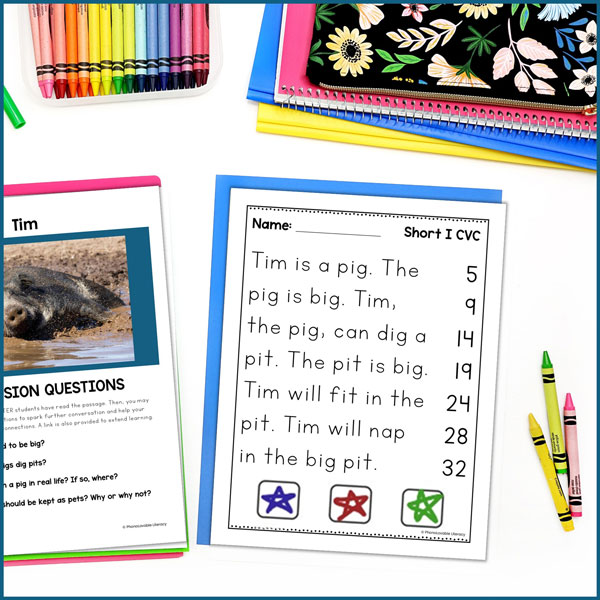
We want our students to have ample opportunities to apply the newly-learned skill in connected text. This promotes both reading accuracy and fluency, and will serve as a bridge to students eventually reading non-controlled text like early graphic novels and chapter books.
✅ There should be something in the decodable text that’s worth talking about
Blevins advises that decodable text should be comprehensible, instructive, and ENGAGING. He notes that students should want to read the story over and over again.
In fiction, I look for relatable, lovable characters.
In nonfiction passages, we like texts about animals, food, and other kid-friendly topics. These give us something to learn and talk about!
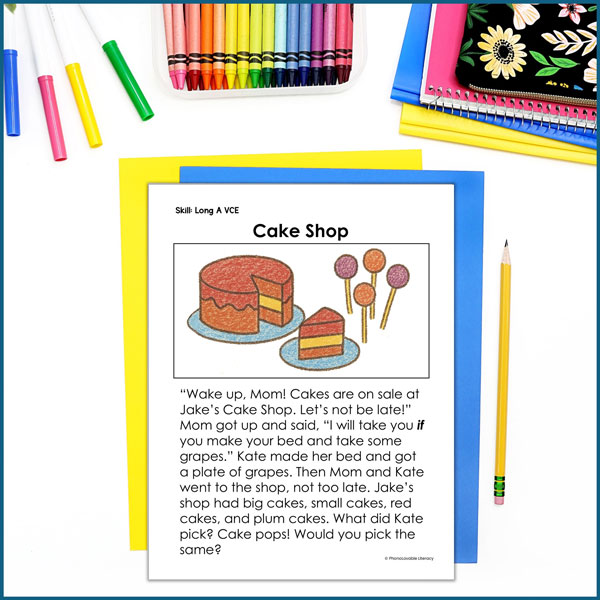
I gravitate more towards nonfiction and realistic fiction because building background knowledge about a variety of topics is so important.
For example, in this set of decodables, kids learn that:
For example, in the decodables I have written to accompany my real photo phonics lessons, kids learn that:
- Some frogs smell (for a purpose!),
- Bats can sing,
- Stick bugs can break off their own leg to escape a predator (with their remaining 5 legs!),
- There’s a shark small enough to fit in your hand, and
- Pumpkins can weigh over 1,000 pounds
Using decodables with actual content is an added opportunity to build oral language, vocabulary, and knowledge. It sends the message early on that we read for meaning, always.
Reading and thinking (and talking about what we read and what we think) go hand in hand!
✅ The text is free of picture cues.
In books and on slides, I look for stories that provide pictures on the page or slide AFTER students read the text. This way, there’s no temptation to guess at words based on the pictures!
I also like one-page passages with either one small picture near the title or no pictures at all (with space for students to illustrate what they visualized while reading).
Decodable passages that check all the boxes
One of my favorite things to create is decodable text that’s meaningful AND enjoyable to read while still providing the necessary practice of applying taught phonics skills in connected text.
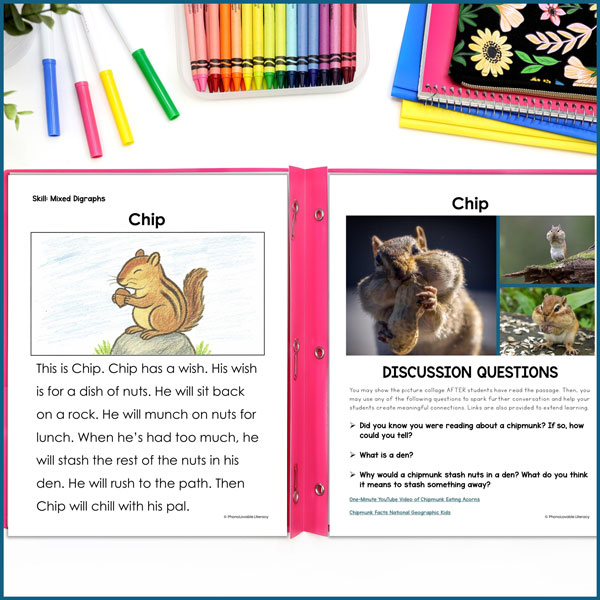
That’s exactly what I had in mind when I wrote the decodable passages included with my real photo phonics slides.
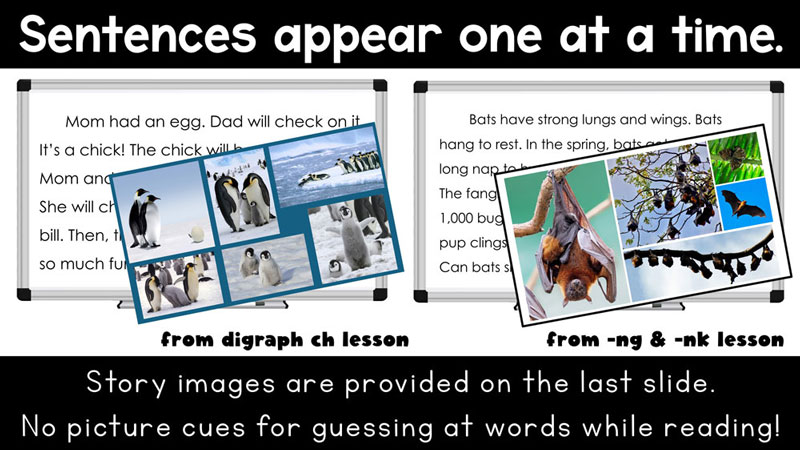
These engaging decodable passages are no-prep AND include complete structured literacy lessons to effortlessly teach 44 phonics skills. The passage at the end of the lesson is the icing on the cake. It provides a meaningful opportunity for your students to apply the new phonics skill and gain confidence as readers.
A great way for students to develop their reading accuracy and fluency is to reread the same passage multiple times for a variety of purposes.
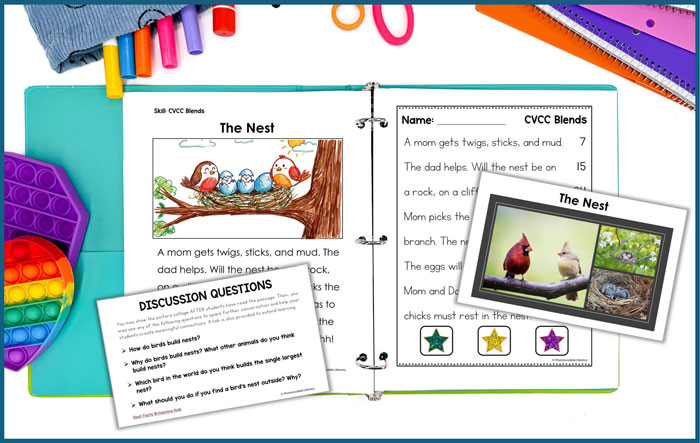
If you are curious about how these passages might benefit your students, you can try the printable versions of the decodables for FREE! This free download covers the same 44 phonics skills that are found in the real photo bundle and allow you to print the decodable texts you need.
There are two different versions within the printable set. One version provides a blank box on top for students to illustrate the passage. Another increases student motivation to read and reread the text, seeing how many words they can read in a minute. You can record those numbers in the boxes at the bottom of the text, or simply let students put a sticker in a box each time they read the passage independently.
Each of the 44 passages also comes with a half-sheet of discussion questions for the teacher, as well as links to short videos and articles you may use to spark further conversation of the topic.
Provide meaningful practice in your whole group or small group lessons, for partners or independent work, tutoring, intervention, or homework!
If you already have a solid structured literacy program but just want to supplement with additional (or more interesting) decodable passages, our free decodable passage set may be just what you need.
Final thoughts
As you explore all the options available today, I hope this blog post helps you feel confident in choosing decodables that support your students’ growth in the best way possible.
When texts are meaningful, well-designed, and aligned with your phonics instruction, they can make a world of difference in how your young readers feel about reading.
Wishing you much success as you find (or fine-tune!) the perfect decodable passages for your classroom!